
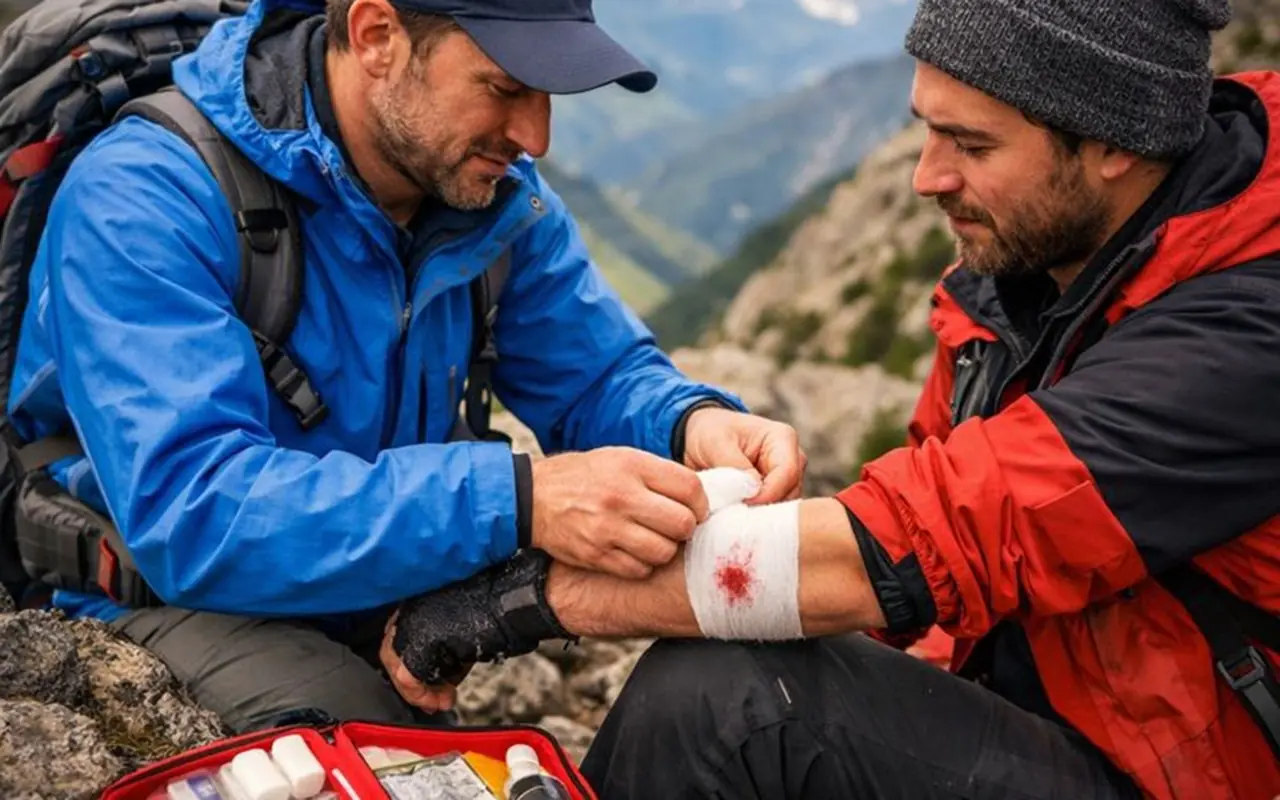
Πρωτόκολλο Ασφαλείας στο Βουνό (STOP)
Στο βουνό, ο πανικός είναι κακός σύμβουλος. Όταν συμβεί ένα ατύχημα ή μια έκτακτη κατάσταση, ακολούθησε το πρωτόκολλο STOP.
⚠️ Το άρθρο αυτό δεν αντικαθιστά την εκπαίδευση στις Πρώτες Βοήθειες ή την ορεινή διάσωση. Κάθε μέλος του ΕΟΣ Ηλιούπολης ενθαρρύνεται να παρακολουθήσει πιστοποιημένη εκπαίδευση Πρώτων Βοηθειών και διαχείρισης επειγόντων περιστατικών στο βουνό.
S – STOP (Σταμάτα)
Μην ενεργήσεις βιαστικά.
Πάρε μια βαθιά ανάσα και αξιολόγησε πρώτα την κατάσταση.
Πριν πλησιάσεις τον τραυματία, βεβαιώσου ότι δεν κινδυνεύεις κι εσύ.
Έλεγξε για:
- πτώσεις βράχων ή λίθων
- κατολισθήσεις
- κίνδυνο πτώσης
- κεραυνούς ή έντονη κακοκαιρία
- χιονοστιβάδα (τον χειμώνα)
Ο πρώτος κανόνας της διάσωσης είναι να μην υπάρξει δεύτερο θύμα.
T – THINK (Σκέψου)
Τι ακριβώς έχει συμβεί;
Κάνε μια γρήγορη εκτίμηση:
- Πόσοι είναι οι τραυματίες;
- Έχει τις αισθήσεις του;
- Αναπνέει φυσιολογικά;
- Υπάρχει σοβαρή αιμορραγία;
- Υπάρχει πιθανότητα τραυματισμού στη σπονδυλική στήλη;
- Μπορεί να επιδεινωθεί η κατάσταση αν μετακινηθεί;
Εφάρμοσε μόνο τις πρώτες βοήθειες που γνωρίζεις.
Μην μετακινείς τον τραυματία, εκτός αν υπάρχει άμεσος κίνδυνος.
O – OBSERVE (Παρατήρησε)
Συγκέντρωσε όλες τις πληροφορίες που θα χρειαστούν οι διασώστες.
Σημείωσε:
- ακριβή θέση (GPS ή συντεταγμένες)
- όνομα διαδρομής ή κορυφής
- υψόμετρο (αν είναι γνωστό)
- αριθμό ατόμων
- είδος τραυματισμού
- καιρικές συνθήκες
- διαθέσιμο εξοπλισμό
Παράλληλα:
- προστάτευσε τον τραυματία από το κρύο, τον αέρα ή τη βροχή
- παρακολούθησε συνεχώς την αναπνοή και την κατάστασή του
- καθησύχασέ τον
P – PLAN (Σχεδίασε)
Οργάνωσε τα επόμενα βήματα.
1. Κάλεσε το 112
Δώσε με ψυχραιμία:
- ποιος είσαι
- πού βρίσκεσαι (GPS ή pin)
- τι συνέβη
- πόσοι τραυματίες υπάρχουν
- κατάσταση τραυματία
- τηλέφωνο επικοινωνίας
2. Ενημέρωσε τον αρχηγό της εξόρμησης
Αν συμμετέχεις σε οργανωμένη δράση του ΕΟΣ Ηλιούπολης, ενημέρωσε άμεσα τον αρχηγό ή τον υπεύθυνο της εξόρμησης.
3. Μείνε στο σημείο
Μην αλλάζεις θέση χωρίς σοβαρό λόγο.
Βοήθησε τους διασώστες να σας εντοπίσουν χρησιμοποιώντας:
- φωτεινά ρούχα
- φακό
- σφυρίχτρα
- καθρεφτάκι σήμανσης
- οποιοδήποτε ασφαλές μέσο αυξάνει την ορατότητα
Μην κάνεις ποτέ
- Μην πανικοβάλλεσαι.
- Μην αφήνεις τον τραυματία μόνο του.
- Μην επιχειρείς επικίνδυνη διάσωση χωρίς εκπαίδευση.
- Μην μετακινείς τραυματία με πιθανό τραυματισμό σπονδυλικής στήλης, εκτός αν κινδυνεύει άμεσα.
- Μην δίνεις φαγητό, ποτό ή αλκοόλ σε σοβαρά τραυματία.
Πριν από κάθε εξόρμηση
- Ενημέρωσε κάποιον για τη διαδρομή σου.
- Έλεγξε την πρόγνωση καιρού.
- Φόρτισε το κινητό και πάρε power bank.
- Έχε μαζί σου:
- φαρμακείο
- ισοθερμική κουβέρτα
- φακό κεφαλής
- σφυρίχτρα
- χάρτη ή GPS
- Μάθε βασικές Πρώτες Βοήθειες.
Θυμήσου
STOP πριν από κάθε απόφαση.
Σταμάτα → Σκέψου → Παρατήρησε → Σχεδίασε
Η ψυχραιμία, η σωστή εκτίμηση και η έγκαιρη ειδοποίηση του 112 σώζουν ζωές.